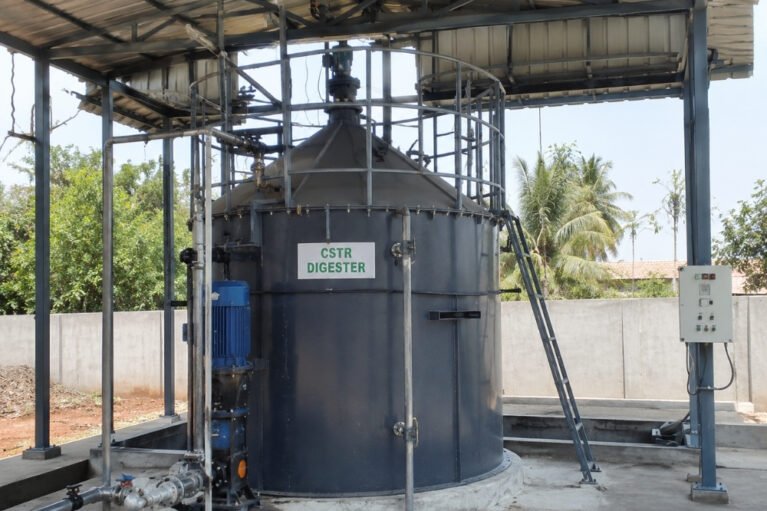
CSTR Digester

A CSTR Digester (Continuous Stirred Tank Reactor) is one of the most common and reliable digesters used in biogas / Bio-CNG plants—especially relevant for agri-waste and organic waste projects like the ones you’re exploring. Let’s break it down cleanly and practically.

What is a CSTR Digester?

A CSTR digester is a closed, cylindrical tank where:

  • Organic slurry is fed continuously

  • Contents are mechanically mixed

  • Anaerobic bacteria convert waste into biogas (CH₄ + CO₂)

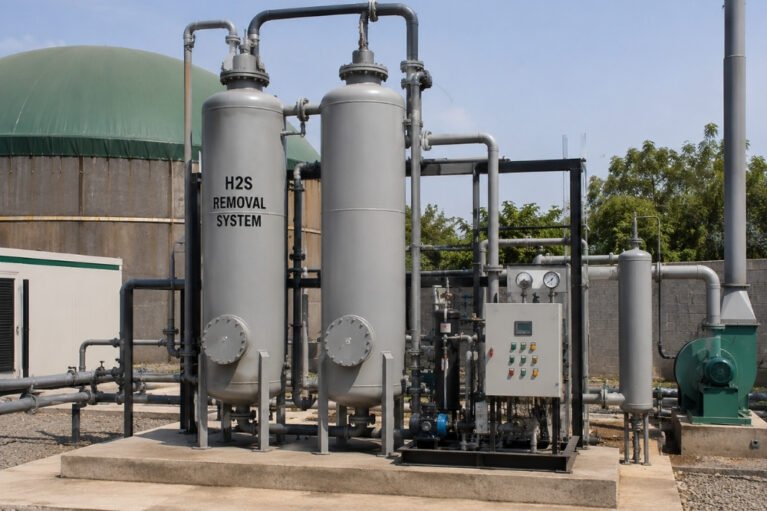
H2S Removal System

An H₂S (Hydrogen Sulfide) removal system is a must-have in any biogas / Bio-CNG plant—especially if you’re running a CSTR digester on agri-waste, press mud, or dung. Let’s explore it from practical plant reality, not textbook theory.

Why H₂S Removal Is Critical

Biogas typically contains 50–3,000 ppm H₂S (sometimes higher). If untreated, it causes:

  • ⚠️ Corrosion of pipelines, compressors, engines

  • ⚠️ Catalyst poisoning in CBG upgrading systems

  • ⚠️ Health hazards (toxic, rotten-egg smell)

  • ⚠️ Failure to meet OMC / BIS CBG specs

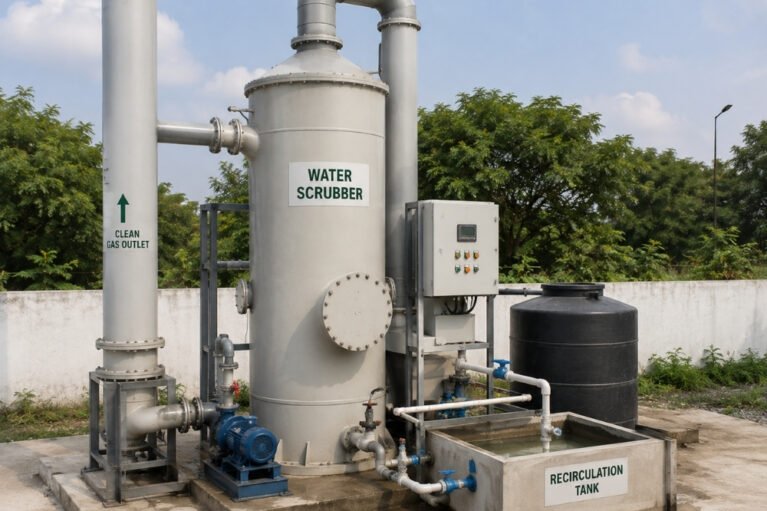
Water Scrubber

A water scrubber is one of the most proven, regulator-friendly, and widely used systems for biogas upgrading to Bio-CNG—especially in Indian agri-waste projects. Let’s explore it from plant design + operation + decision-making angles.

What Is a Water Scrubber?

A water scrubber removes CO₂ and H₂S from biogas by physical absorption in water under pressure.

Key principle:
CO₂ and H₂S dissolve in water much more easily than methane (CH₄).

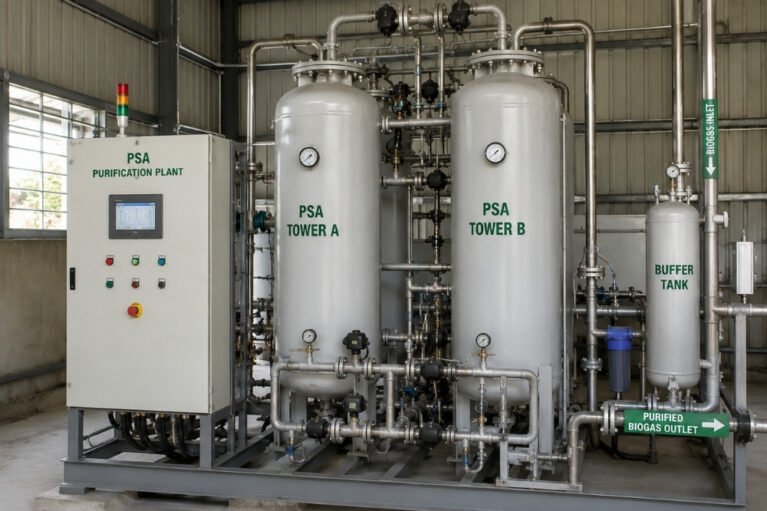
PSA Purification Plant

A PSA Purification Plant (Pressure Swing Adsorption) is a high-precision biogas upgrading technology used to convert raw biogas into Bio-CNG (≥95% CH₄). It’s more “engineering-intensive” than a water scrubber—but when done right, it delivers excellent gas quality with minimal water use.

What Is a PSA Purification Plant?

PSA separates gases based on their different adsorption behavior on solid adsorbents under pressure.

  • CO₂, H₂S, moisture, O₂, N₂ → adsorbed

  • CH₄ → passes through as product gas

The system works in cycles using pressure changes—no chemicals, no water.

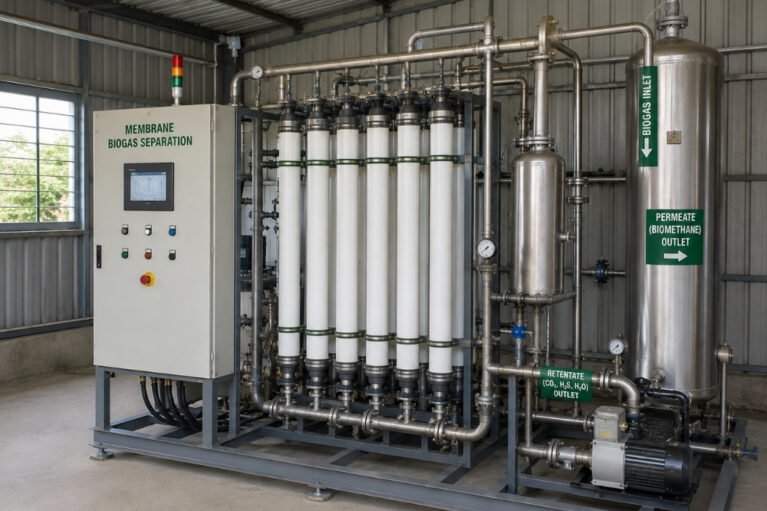
Membrane Biogas Separation

Membrane Biogas Separation is a modern, modular way to upgrade biogas into Bio-CNG–grade methane using selective gas-permeable membranes. It sits neatly between water scrubbers and PSA in terms of CAPEX, footprint, and automation—and it’s gaining traction in India for mid-to-large plants.

What Is Membrane Biogas Separation?

A membrane system uses polymer membranes that let CO₂, H₂S, H₂O, O₂, N₂ pass through faster than CH₄.

  • Permeate side: CO₂-rich gas

  • Retentate side: CH₄-rich product gas

No chemicals. Minimal water. Continuous operation.

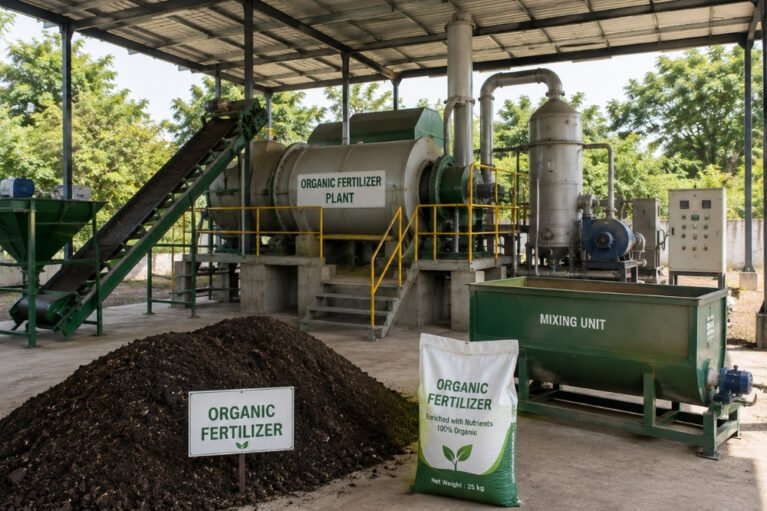
Organic Fertilizer

Organic fertilizer from biogas plants is not a by-product—it’s a second revenue stream when designed properly. Since you’re exploring CSTR digestion and upgrading systems, this closes the loop on waste → energy → soil health.

What Is Organic Fertilizer (from Biogas)?

After anaerobic digestion, the leftover material is called digestate. It is:

  • Rich in N, P, K

  • Biologically stabilized

  • Low odor

  • Pathogen-reduced

With proper processing, digestate becomes market-ready organic fertilizer.

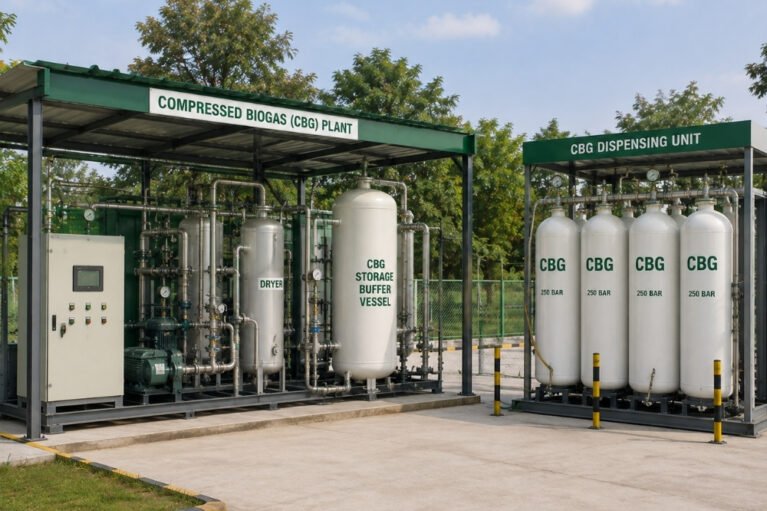
Compressed Biogas

Compressed Biogas (CBG)—also called Bio-CNG—is the final, high-value product of the whole biogas chain you’ve been exploring (CSTR → H₂S removal → upgrading → fertilizer). This is where energy, policy, and revenue meet.

What Is Compressed Biogas (CBG)?

CBG is purified biogas with:

  • ≥95% methane (CH₄)

  • Compressed to 200–250 bar

  • Stored and transported like CNG

Chemically, CBG ≈ Natural Gas, but it’s renewable and carbon-negative.

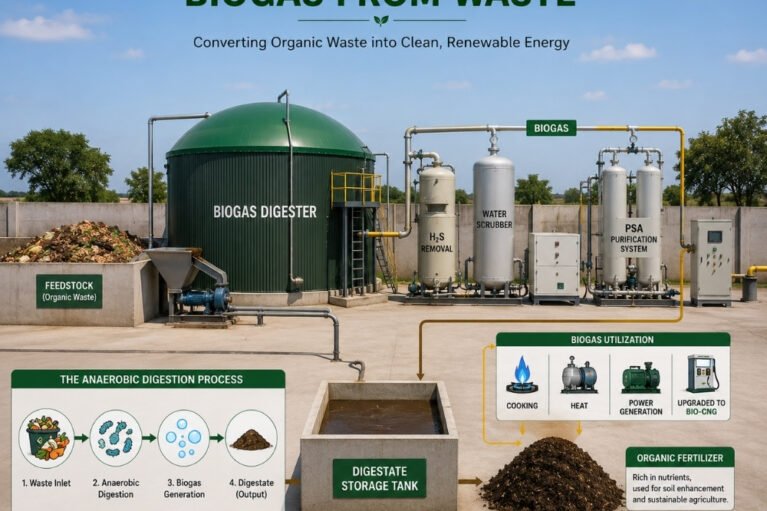
Biogas From Waste

Biogas from Waste is the foundation of everything you’ve been exploring—CSTR digesters, H₂S removal, upgrading, fertilizer, and finally CBG. Think of it as waste management + energy production + soil restoration rolled into one system.

What Is Biogas from Waste?

Biogas is produced when organic waste decomposes anaerobically (without oxygen), yielding:

  • Biogas: 50–65% methane (CH₄)

  • Digestate: nutrient-rich organic fertilizer

Pellets from Biogas Plant Waste

Pellets are solid bio-products made by drying and compressing digestate (the leftover slurry after biogas production). They are nutrient-rich, easy to handle, and environmentally friendly.

Raw Material Source

  • Biogas plant digestate from:

    • Agricultural waste

    • Cattle dung

    • Food & organic waste

  • Solid fraction separated using screw press / decanter

Add a new location

Edit Location

Add up to 5 images to create a gallery for this location.

×
Scroll to Top
Call Now Button